
 Office Furniture
 Home Furniture
Which Type of Chair is Best for Posture?

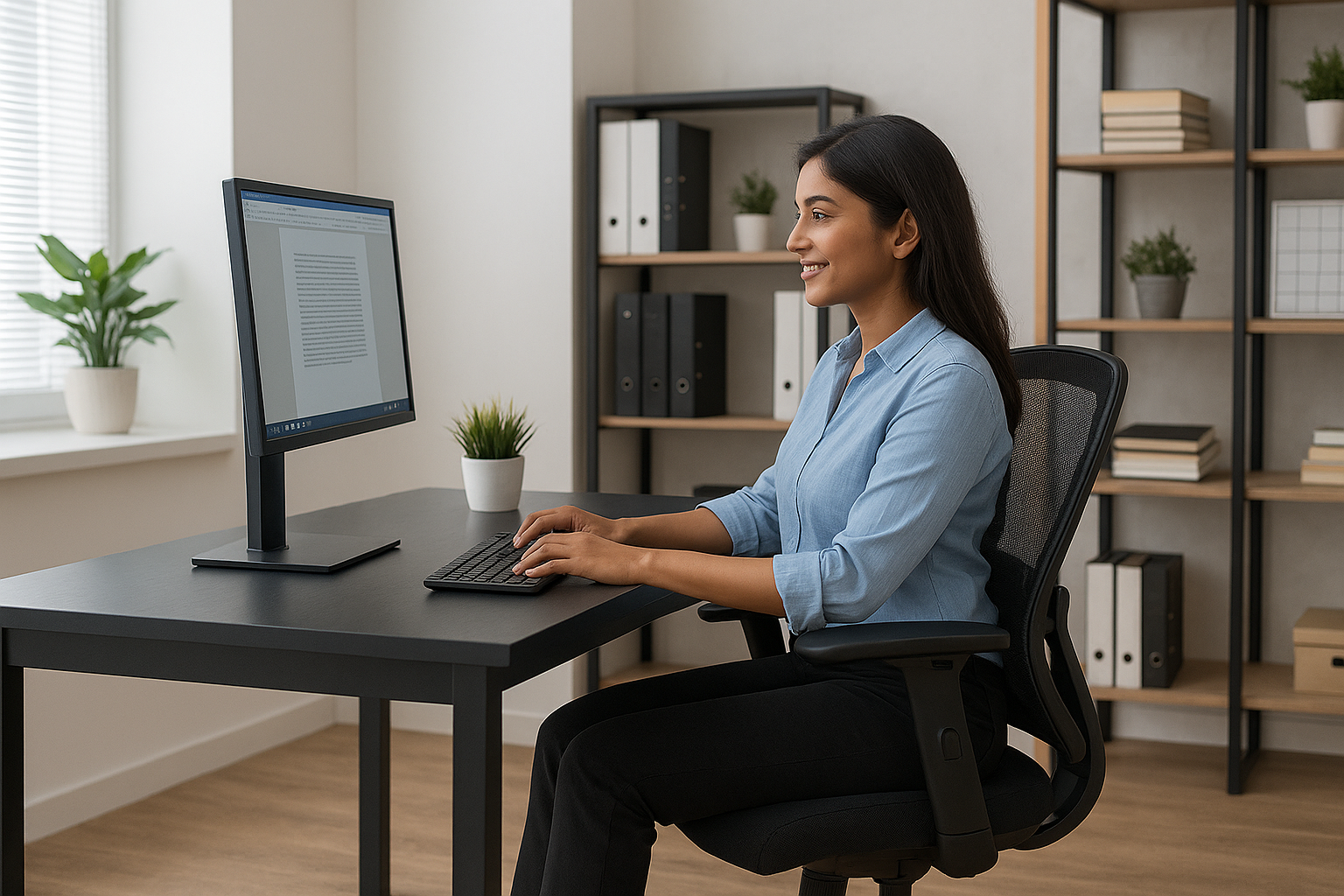
Working long hours at a desk often means sitting in one position for extended periods, something that can place stress on the spine and lead to discomfort or chronic pain. The right chair plays a crucial role in maintaining good posture and preventing strain on the back, neck, and shoulders.
There isn’t one single “best” chair for posture that fits everyone. Instead, the ideal chair is one that allows adjustability, support, and comfort so that it can be tailored to an individual’s body and work style.
What Features Should a Posture-Friendly Chair Have?
1. Seat Height
The chair should be easily adjustable. A range between 16 to 21 inches off the floor works for most users. This ensures that feet rest flat on the ground, thighs remain parallel to the floor, and arms are level with the desk.
2. Seat Width and Depth
The seat should be wide enough (17–20 inches is standard) and deep enough to support the user comfortably. Ideally, there should be a 2–4 inch gap between the back of the knees and the front edge of the seat. Adjustable forward/backward tilt adds to the comfort.
3. Lumbar Support
The lumbar spine has a natural inward curve. Without proper support, people tend to slouch, flattening this curve and putting pressure on the lower spine. A good chair includes adjustable lumbar support (both height and depth) to fit the natural shape of the back.
4. Backrest
A supportive backrest (12–19 inches wide) is essential. If it’s separate from the seat, it should allow height and angle adjustments. If combined with the seat, it should tilt forward and backward with a locking feature to hold the chosen angle.
5. Armrests
Adjustable armrests allow the arms to rest lightly while keeping the shoulders relaxed. Elbows and lower arms should be supported without interfering with typing or desk work.
6. Swivel and Mobility
The chair should rotate easily to help users reach different areas of their desk without twisting or straining. Smooth-rolling casters and a stable base also reduce unnecessary effort.
7. Seat Material
Adequate padding and breathable fabric are important for comfort during long hours of sitting. Breathable mesh or soft cloth is often preferred over harder surfaces.
The best chair for posture is one that adjusts to you, not the other way around. Look for chairs that offer flexibility in seat height, depth, lumbar support, and backrest positioning. These features ensure that your body remains aligned, reducing strain and promoting better posture throughout the workday.
FAQs
> Is a high-back chair better than a mid-back chair for posture?
High-back chairs provide full spine and neck support, making them suitable for longer working hours. Mid-back chairs are compact and work well for shorter durations or smaller desks.
> Are mesh chairs good for posture?
Yes. Mesh chairs are breathable and, when designed with lumbar support, they keep the back cool and aligned. However, padding quality should also be considered.
> What’s the ideal sitting posture in an office chair?
Feet flat on the floor, knees at a 90° angle, back straight against the backrest, and arms resting lightly on adjustable armrests.

Good information to know